Water conservation is an essential consideration when designing and managing Sonoma and Marin County landscapes. Our area enjoys a Mediterranean climate characterized by wet winters and long, dry summers with little rainfall. Plants that are suited or adapted to local conditions not only use less water but generally grow more successfully and robustly, with fewer insect and disease problems. They ultimately create a healthier, more beautiful and more sustainable landscape.
Below is a hand selected plant list for Sonoma and Marin counties that displays mostly native species that will thrive in our climate. You can search, filter and save specific plants to your plant list and also print plant cards.
-
Red Yucca
Hesperaloe parviflora -
California Native
Toyon
Heteromeles arbutifolia -
California Native
Island Alum Root
Heuchera maxima -
California Native
Ocean Spray
Holodiscus discolor -
California Native
Douglas Iris, Pacific Coast Hybrids
Iris douglasiana & cvs -
California Native
California Grey Rush
Juncus patens -
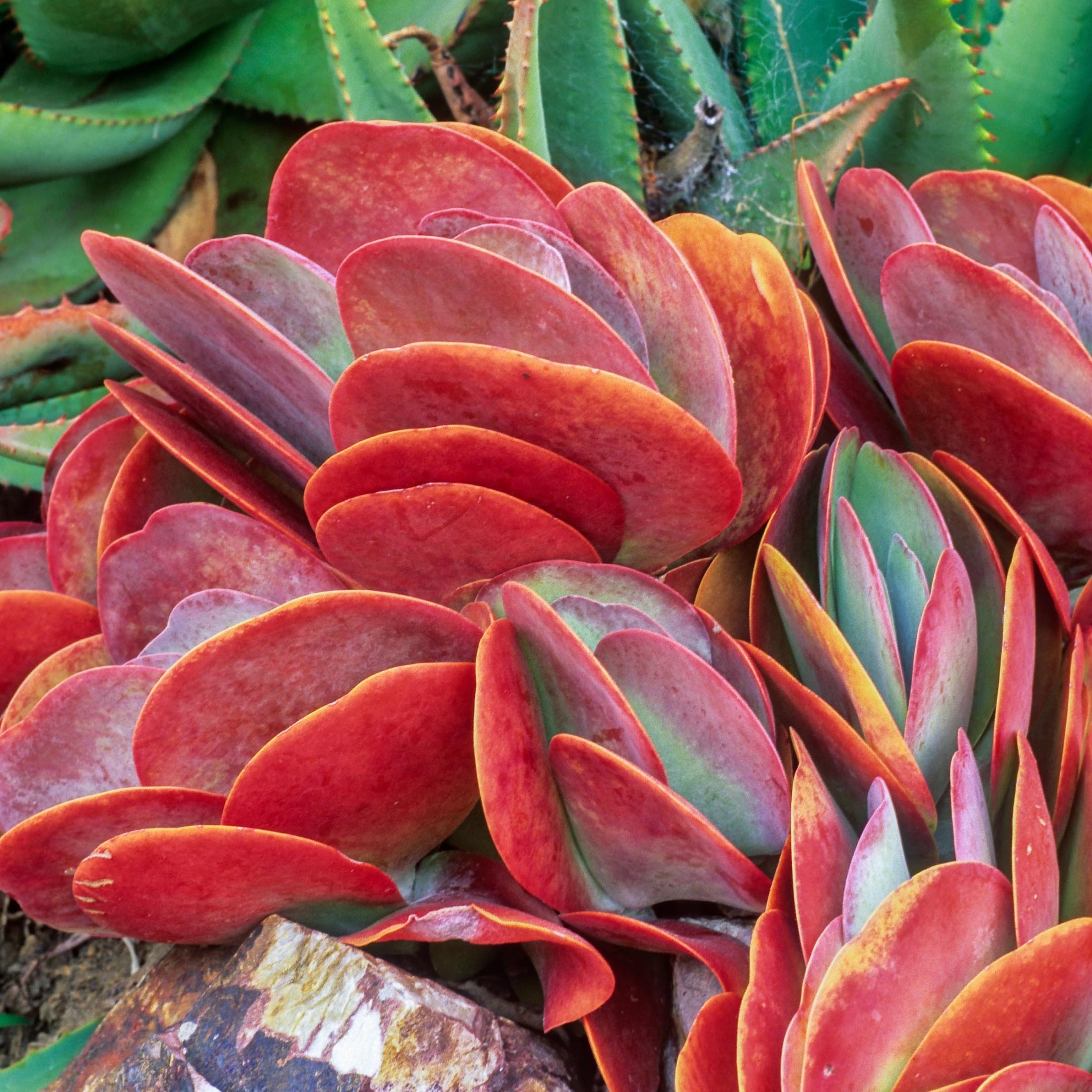
Kalanchoe
Kalanchoe spp. -
Red Hot Poker, Torch Lily
Kniphofia spp. -
Crape Myrtle
Lagerstroemia indica -
Lantana
Lantana spp. & cvs. -
Saratoga Laurel
Laurus 'Saratoga' -
Sweet Bay
Laurus nobilis
Red Yucca
Hesperaloe parviflora
Succulent
Care:
Full Sun
Very Low
Low
Well Drained
Look:
Medium
size
Green -Light
leaves
Pink
flowers
Red
flowers
Red Yucca
Hesperaloe parviflora
Succulent
Care:
Full Sun
Very Low
Low
Well Drained
Look:
Medium
size
Green -Light
leaves
Pink
flowers
Red
flowers
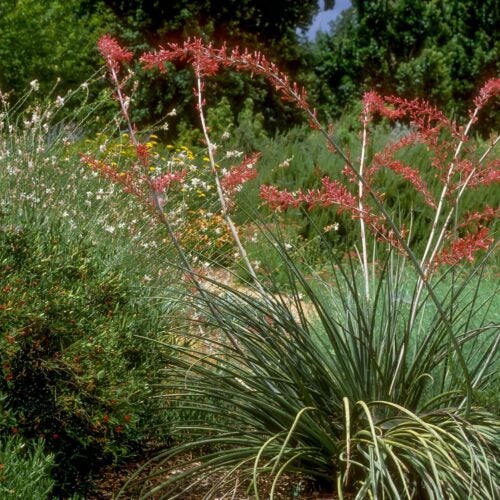
Hesperaloe parviflora (red yucca), succulent, 3-4 feet tall and 4-6 feet wide, with a rosette of stiff, narrow, grasslike leaves with no spines. Rose-pink, tubular flowers on 5- to 6-foot, arching stems in summer. Native to deserts of western Texas and northeastern Mexico. Sun to light shade, well-drained soils.
Toyon
Heteromeles arbutifolia
CA Native, Shrub
Care:
Full Sun
Partial Shade
Low
Well Drained
Look:
Large
size
Medium
size
Green - Dark
leaves
White
flowers
Toyon
Heteromeles arbutifolia
CA Native, Shrub
Care:
Full Sun
Partial Shade
Low
Well Drained
Look:
Large
size
Medium
size
Green - Dark
leaves
White
flowers
California native, evergreen shrub or small tree often seen growing in Sonoma and Marin county wildlands. Lacy, white flower clusters in spring attract pollinators; red berries in winter provide a splash of color and an important food source for birds. The name “Hollywood” was born from the abundance of toyon in the hills of southern California and its resemblance to European holly. The cultivar ‘Davis Gold’ has yellow berries and may be more disease-resistant than the species.
Island Alum Root
Heuchera maxima
CA Native, Ground Cover
Care:
Partial Shade
Shade
Low
Well Drained
Look:
Small
size
Green
leaves
Cream
flowers
Pink
flowers
White
flowers
Island Alum Root
Heuchera maxima
CA Native, Ground Cover
Care:
Partial Shade
Shade
Low
Well Drained
Look:
Small
size
Green
leaves
Cream
flowers
Pink
flowers
White
flowers
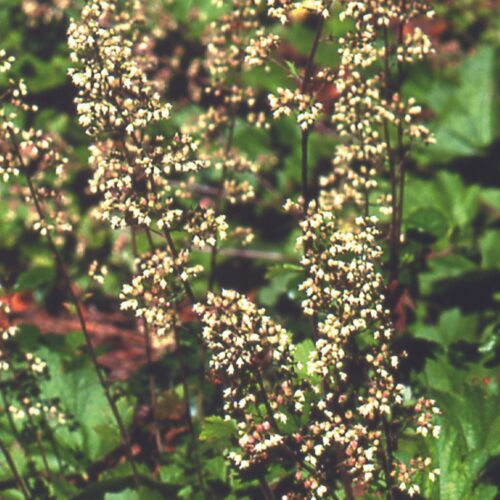
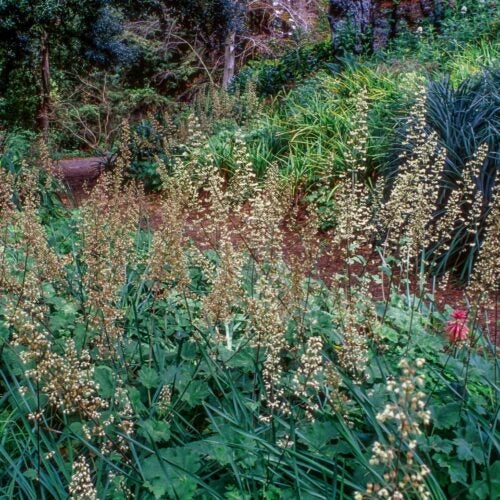
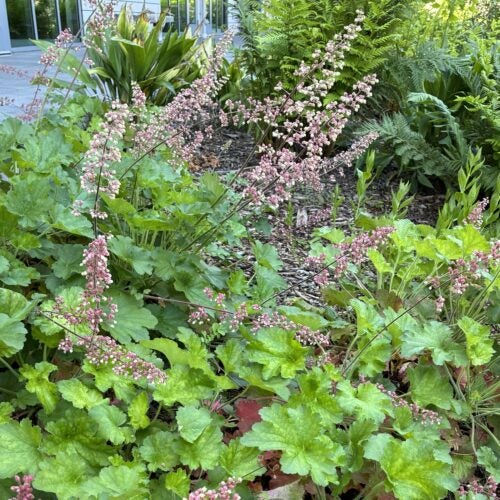
Island Alum Root is a beautiful groundcover attractive to hummingbirds and other birds. It grows to 1 foot tall and 2 feet wide with its large, bright green, heart-shaped leaves airy clusters of tiny, bell-shaped, pinkish white, early spring flowers. It is native to the Channel islands and enjoys coastal gardens. It likes cool sun to part shade and well-drained soil. Plants occasionally may need lifting and resettling as they tend to push themselves up and out of the soil.
Ocean Spray
Holodiscus discolor
CA Native, Shrub
Care:
Partial Shade
Shade
Low
Most Soils
Look:
Medium
size
Green - Dark
leaves
White
flowers
Ocean Spray
Holodiscus discolor
CA Native, Shrub
Care:
Partial Shade
Shade
Low
Most Soils
Look:
Medium
size
Green - Dark
leaves
White
flowers
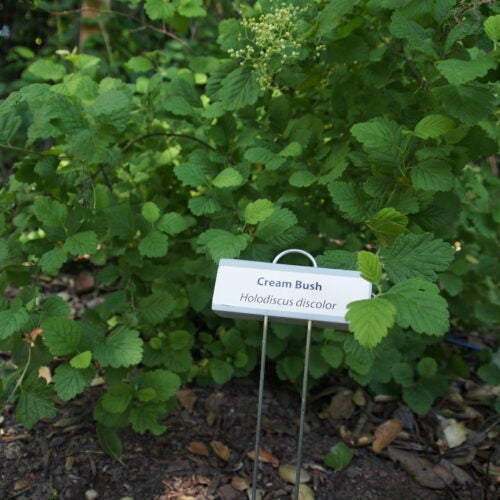
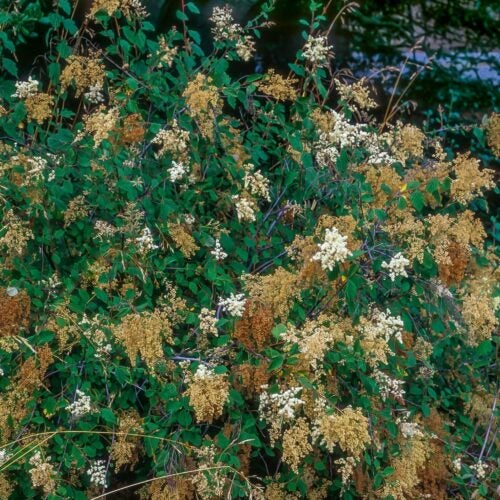
Also known as “Cream Bush” or “Sea Foam” this California native is known for its beautiful clusters of fragrant white flowers. It grows up to 3-10 feet tall and wide at a quick pace. Cream Bush is an attractive deciduous shrub, commonly found in forest and woodland environments. In the garden, it does well in shade or part shade and adapts to a variety of soil types. The lovely blooms attract hummingbirds, bees, and butterflies. After blooming, the seeds provide food for birds, and the plant itself provides shelter for birds and small animals.
Douglas Iris, Pacific Coast Hybrids
Iris douglasiana & cvs
CA Native
Care:
Partial Shade
Shade
Low
Most Soils
Look:
Green - Dark
leaves
Lavender
flowers
Purple
flowers
Violet
flowers
Yellow
flowers
Douglas Iris, Pacific Coast Hybrids
Iris douglasiana & cvs
CA Native
Care:
Partial Shade
Shade
Low
Most Soils
Look:
Green - Dark
leaves
Lavender
flowers
Purple
flowers
Violet
flowers
Yellow
flowers
Iris are a large and diverse group of perennials that grow from either bulbs or rhizomes. The California native Douglas iris and cultivars known as Pacific Coast Hybrids are an excellent choice for summer-dry gardens and understory plantings. Fall rain brings new growth in the form of thin, upright leaves, followed in late winter to early spring by the first blossoms. Douglas iris commonly ranges in color from lavender to purple, but cultivars are available in a range of colors including white and yellow. Established plantings can be lifted and divided after the first significant fall rain and either replanted or put into containers to share with others.
California Grey Rush
Juncus patens
CA Native
Care:
Full Sun
Partial Shade
Low
Well Drained
Look:
Gray Green
leaves
California Grey Rush
Juncus patens
CA Native
Care:
Full Sun
Partial Shade
Low
Well Drained
Look:
Gray Green
leaves
California gray rush is a go-to species for the summer-dry rain garden. It will thrive in moist conditions and its roots will help stabilize soil and filter stormwater runoff. It is also tolerant of extended periods of drought. Clumps of stiff, upright foliage provide an interesting contrast among other perennials. ‘Elk Blue’ is a widely available selection from Mendocino County. Its bluish gray foliage is shorter than the typical gray rush.
Kalanchoe
Kalanchoe spp.
Succulent
Care:
Full Sun
Partial Shade
Shade
Low
Well Drained
Look:
Small
size
Gray Green
leaves
Green
leaves
Reddish
leaves
Variegated
leaves
Orange
flowers
Pink
flowers
Yellow
flowers
Kalanchoe
Kalanchoe spp.
Succulent
Care:
Full Sun
Partial Shade
Shade
Low
Well Drained
Look:
Small
size
Gray Green
leaves
Green
leaves
Reddish
leaves
Variegated
leaves
Orange
flowers
Pink
flowers
Yellow
flowers
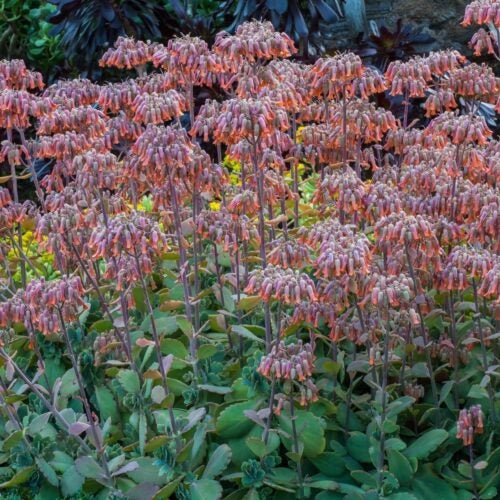
Kalanchoe species vary in size from 6 inches to 6 feet tall and wide. Some form stemless rosettes, a few almost vinelike or trailing, others shrubby on upright, branched or unbranched stems. Leaf shapes and colors range from smooth and glossy green to softly felted and gray and from rounded to triangular to lance-shaped or cylindrical. Leaves may have toothed or serrated margins and many are edged, flushed, or otherwise marked with contrasting colors. Flowers of most species have small, pendulous, tubular or bell-shaped flowers in winter or early spring. Most species are native to southern and eastern Africa, especially Madagascar. Cool sun to light shade or afternoon shade, well-drained soils. Best in mild, coastal climates.
Red Hot Poker, Torch Lily
Kniphofia spp.
Care:
Full Sun
Partial Shade
Low
Well Drained
Look:
Small
size
Green
leaves
Orange
flowers
Red
flowers
Yellow
flowers
Red Hot Poker, Torch Lily
Kniphofia spp.
Care:
Full Sun
Partial Shade
Low
Well Drained
Look:
Small
size
Green
leaves
Orange
flowers
Red
flowers
Yellow
flowers
Mostly South African perennials with grass-like succulent leaves and a clumping growth habit that are characterized by striking displays of brightly colored flower clusters on long, bare stems resembling red hot pokers. The majority of plants offered are cultivars of different sizes and various flower colors, including yellows and oranges. Sizes range from about 1-4’ tall.
Crape Myrtle
Lagerstroemia indica
Tree
Care:
Full Sun
Low
Most Soils
Look:
Medium
size
Green
leaves
Lavender
flowers
Pink
flowers
Purple
flowers
White
flowers
Crape Myrtle
Lagerstroemia indica
Tree
Care:
Full Sun
Low
Most Soils
Look:
Medium
size
Green
leaves
Lavender
flowers
Pink
flowers
Purple
flowers
White
flowers
Crape Myrtle has become a ubiquitous street tree due to its attractive bark, fall color, and flowers all helping to provide year-round interest, as well as being of manageable size and tending not to lift sidewalks with its roots. The most commonly available crape myrtles are Lagerstroemia indica and many hybrids and their shrub forms, which may be less prone to mildew than the species. Flowers occur in late summer in white, pinks, and reddish purple. Crape myrtles are naturally multi-trunked, and plants grown as standards with a single trunk have a tendency to grow suckers that should be removed.
Lantana
Lantana spp. & cvs.
Ground Cover, Shrub
Care:
Full Sun
Partial Shade
Low
Well Drained
Look:
Medium
size
Small
size
Green
leaves
Multi
flowers
Orange
flowers
Pink
flowers
Purple
flowers
Yellow
flowers
Lantana
Lantana spp. & cvs.
Ground Cover, Shrub
Care:
Full Sun
Partial Shade
Low
Well Drained
Look:
Medium
size
Small
size
Green
leaves
Multi
flowers
Orange
flowers
Pink
flowers
Purple
flowers
Yellow
flowers
Evergreen shrubs and perennials for hot, sunny locations available in both upright and groundcover forms that flower from spring to fall with colors including purple, yellow, red, and pink. Two species, Lantana camara (4-6’ x 6-8’) and L. montevidenis (12-18” x 5-10’), are widely available along with many hybrids and cultivars offering a variety of colors and sizes.
Saratoga Laurel
Laurus 'Saratoga'
Shrub, Tree
Care:
Partial Shade
Low
Well Drained
Look:
Medium
size
Green - Dark
leaves
Green
flowers
Yellow
flowers
Saratoga Laurel
Laurus 'Saratoga'
Shrub, Tree
Care:
Partial Shade
Low
Well Drained
Look:
Medium
size
Green - Dark
leaves
Green
flowers
Yellow
flowers
Small, slow growing evergreen bay tree or large shrub. ‘Saratoga’ has small, pale yellow flowers in the spring. Can tolerate poor soils but prefers well drained.
Sweet Bay
Laurus nobilis
Tree
Care:
Full Sun
Partial Shade
Low
Most Soils
Look:
Medium
size
Green - Dark
leaves
Yellow
flowers
Sweet Bay
Laurus nobilis
Tree
Care:
Full Sun
Partial Shade
Low
Most Soils
Look:
Medium
size
Green - Dark
leaves
Yellow
flowers
Slow-growing, Mediterranean evergreen shrub or tree with aromatic leaves used in cooking. Naturally multi-trunked so may tend to send out suckers. Often trained as a topiary in containers to provide a formal appearance. ‘Saratoga’ has broader leaves and an upright growth habit.
Print this plant card