Water Smart Plant Picker
A curated list of plants that will thrive in our climate
Water conservation is an essential consideration when designing and managing Sonoma and Marin County landscapes. Our area enjoys a Mediterranean climate characterized by wet winters and long, dry summers with little rainfall. Plants that are suited or adapted to local conditions not only use less water but generally grow more successfully and robustly, with fewer insect and disease problems. They ultimately create a healthier, more beautiful and more sustainable landscape.
Below is a hand selected plant list for Sonoma and Marin counties that displays mostly native species that will thrive in our climate. You can search, filter and save specific plants to your plant list and also print plant cards.
-
Germander
Teucrium spp. -
Creeping Thyme
Thymus praecox -
Thyme
Thymus spp. -
California Native
Woolly Bluecurls
Trichostema lanatum -
Society Garlic
Tulbaghia violacea -
Chinese Evergreen Elm
Ulmus parvifolia -
Verbena
Verbena spp. -
Chaste Tree
Vitex agnus-castus -
California Native
California Wild Grape
Vitis californica -
Coast Rosemary
Westringia spp. -
Yucca
Yucca spp.
Germander
Teucrium spp.
Ground Cover, Shrub
Care:
Full Sun
Very Low
Low
Well Drained
Look:
Small
size
Green
leaves
Silver
leaves
Lavender
flowers
Pink
flowers
Purple
flowers
- Blooming seasons:
- Fall | Spring | Summer
- Life cycle:
- Perennial
- Foliage:
- Evergreen
- Wildlife habitat:
- Hummingbird Habitat
- Animal resilience:
- Deer Resistant
Germander
Teucrium spp.
Ground Cover, Shrub
Care:
Full Sun
Very Low
Low
Well Drained
Look:
Small
size
Green
leaves
Silver
leaves
Lavender
flowers
Pink
flowers
Purple
flowers
- Blooming seasons:
- Fall | Spring | Summer
- Life cycle:
- Perennial
- Foliage:
- Evergreen
- Wildlife habitat:
- Hummingbird Habitat
- Animal resilience:
- Deer Resistant
Mediterranean, flowering, shrubby perennials with aromatic foliage.
- Wall germander (T. chamaedrys [x lucidrys], 1’ x 2’) is a popular groundcover with upright stems, dark green leaves, and red-purple or white flowers in summer.
- Majorcan germander (T. cossonii [majoricum], 6” x 2’) is a creeping perennial that produces a profusion of rosy purple flowers in mid-to-late spring.
- Bush germander (T. fruticans, 4-8’ x 4-8’) has silvery foliage and bears lavender-blue flower spikes from winter to spring and sporadically throughout the year.
Creeping Thyme
Thymus praecox
Ground Cover
Care:
Full Sun
Partial Shade
Low
Well Drained
Look:
Small
size
Gray Green
leaves
Pink
flowers
Purple
flowers
- Blooming seasons:
- Summer
- Life cycle:
- Perennial
- Foliage:
- Evergreen
- Wildlife habitat:
- Bee Habitat | Butterfly Habitat | Pollinator Habitat
- Animal resilience:
- Deer Resistant
Creeping Thyme
Thymus praecox
Ground Cover
Care:
Full Sun
Partial Shade
Low
Well Drained
Look:
Small
size
Gray Green
leaves
Pink
flowers
Purple
flowers
- Blooming seasons:
- Summer
- Life cycle:
- Perennial
- Foliage:
- Evergreen
- Wildlife habitat:
- Bee Habitat | Butterfly Habitat | Pollinator Habitat
- Animal resilience:
- Deer Resistant
Creeping thyme grows 2-3 inches tall and spreads 1-3 feet wide and can withstand foot traffic, making it an excellent choice for a walkable groundcover or turf alternative. It has fragrant pinkish-purplish tubular flowers which bloom in the summer. It requires well-drained, preferably sandy or rocky soil.
Thyme
Thymus spp.
Ground Cover
Care:
Full Sun
Low
Well Drained
Look:
Small
size
Green
leaves
Lavender
flowers
Pink
flowers
- Blooming seasons:
- Spring | Summer
- Life cycle:
- Perennial
- Foliage:
- Evergreen
- Wildlife habitat:
- Bee Habitat
- Animal resilience:
- Deer Resistant | Pest Tolerance
Thyme
Thymus spp.
Ground Cover
Care:
Full Sun
Low
Well Drained
Look:
Small
size
Green
leaves
Lavender
flowers
Pink
flowers
- Blooming seasons:
- Spring | Summer
- Life cycle:
- Perennial
- Foliage:
- Evergreen
- Wildlife habitat:
- Bee Habitat
- Animal resilience:
- Deer Resistant | Pest Tolerance
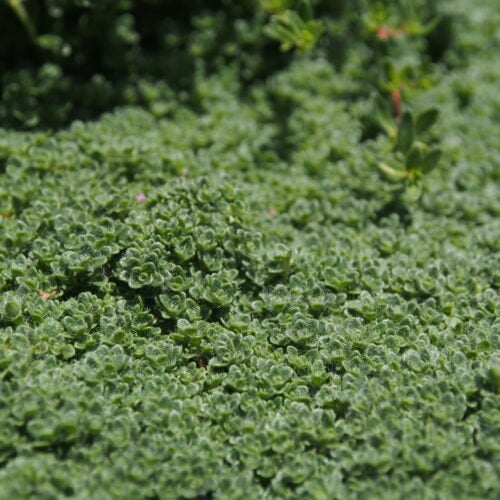
These aromatic Mediterranean perennials include many types used for culinary purposes, as well as others used as ornamental groundcovers. Creeping Thyme makes an excellent low-water use groundcover to replace lawn. Tiny green to gray-green aromatic leaves and masses of tiny flowers in spring or summer. Best in sun with excellent drainage. Shear taller plants occasionally for best form and more flowers.
Examples: The following examples are all available in many named varieties.
- Lemon thyme (T. x citriodorus, 1’ x 2’) has a lemony fragrance.
- Creeping thyme (T. praecox, 2-6” x 2-3’) provides an excellent groundcover between stepping stones.
- Woolly thyme (T. pseudolanuginosus, 2-4” x 3’) has wooly gray leaves.
- Elfin thyme (T. serpyllum ‘Elfin’, 1-2” x 6-12”) is one of the smallest thymes with tiny leaves and a very compact growth habit.
- Common thyme (T. vulgaris, 1’ x 2’) and named varieties are most commonly used for culinary purposes.
Woolly Bluecurls
Trichostema lanatum
CA Native, Shrub
Care:
Full Sun
Partial Shade
Very Low
Well Drained
Look:
Medium
size
Green
leaves
Blue
flowers
Lavender
flowers
- Blooming seasons:
- Spring | Summer
- Life cycle:
- Perennial
- Foliage:
- Evergreen
- Wildlife habitat:
- Bee Habitat | Butterfly Habitat | Hummingbird Habitat | Pollinator Habitat
- Animal resilience:
Woolly Bluecurls
Trichostema lanatum
CA Native, Shrub
Care:
Full Sun
Partial Shade
Very Low
Well Drained
Look:
Medium
size
Green
leaves
Blue
flowers
Lavender
flowers
- Blooming seasons:
- Spring | Summer
- Life cycle:
- Perennial
- Foliage:
- Evergreen
- Wildlife habitat:
- Bee Habitat | Butterfly Habitat | Hummingbird Habitat | Pollinator Habitat
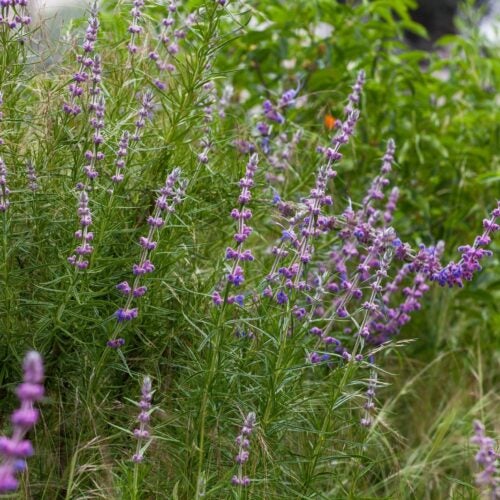
Woolly Bluecurls are a California native member of the mint family with a sweet minty aroma. They can grow quickly to 3-4 feet tall and 4-5 feet wide, but only live about 4-5 years. This shrub requires regular water until it is established, at which point too much water (even just occasional water in the summer) can kill it. It requires perfect drainage. Pollinators find it very attractive.
Society Garlic
Tulbaghia violacea
Bulb
Care:
Full Sun
Partial Shade
Low
Most Soils
Look:
Small
size
Green
leaves
Lavender
flowers
Pink
flowers
- Blooming seasons:
- Spring | Summer
- Life cycle:
- Perennial
- Foliage:
- Herbaceous
- Animal resilience:
- Deer Resistant
Society Garlic
Tulbaghia violacea
Bulb
Care:
Full Sun
Partial Shade
Low
Most Soils
Look:
Small
size
Green
leaves
Lavender
flowers
Pink
flowers
- Blooming seasons:
- Spring | Summer
- Life cycle:
- Perennial
- Foliage:
- Herbaceous
- Animal resilience:
- Deer Resistant
Society garlic is the most commonly available from this group of South African perennials. Clumps of narrow, evergreen, strappy leaves are topped with tall flower stalks that display clusters of lavender flowers from spring through summer. Society garlic has a strong garlic-like odor!
Chinese Evergreen Elm
Ulmus parvifolia
Tree
Care:
Full Sun
Partial Shade
Low
Most Soils
Look:
Large
size
Green
leaves
- Blooming seasons:
- Summer
- Life cycle:
- Perennial
- Foliage:
- Evergreen
- Animal resilience:
Chinese Evergreen Elm
Ulmus parvifolia
Tree
Care:
Full Sun
Partial Shade
Low
Most Soils
Look:
Large
size
Green
leaves
- Blooming seasons:
- Summer
- Life cycle:
- Perennial
- Foliage:
- Evergreen
Chinese evergreen elm has proven to be one of the most resistant species to Dutch elm disease and is a good choice for California gardens where a large tree is needed. This tree from China, Korea, and Japan has a broad, rounded canopy and is semi-evergreen in milder climate zones. Fast growing to 40-60 feet tall and wide. Exfoliating bark provides additional interest. Several cultivars are available offering different leaf characteristics.
Verbena
Verbena spp.
CA Native, Shrub
Care:
Full Sun
Partial Shade
Very Low
Low
Most Soils
Look:
Medium
size
Small
size
Green
leaves
Pink
flowers
Purple
flowers
White
flowers
- Blooming seasons:
- Fall | Spring | Summer | Winter
- Life cycle:
- Perennial
- Foliage:
- Evergreen | Herbaceous
- Wildlife habitat:
- Butterfly Habitat
Verbena
Verbena spp.
CA Native, Shrub
Care:
Full Sun
Partial Shade
Very Low
Low
Most Soils
Look:
Medium
size
Small
size
Green
leaves
Pink
flowers
Purple
flowers
White
flowers
- Blooming seasons:
- Fall | Spring | Summer | Winter
- Life cycle:
- Perennial
- Foliage:
- Evergreen | Herbaceous
- Wildlife habitat:
- Butterfly Habitat
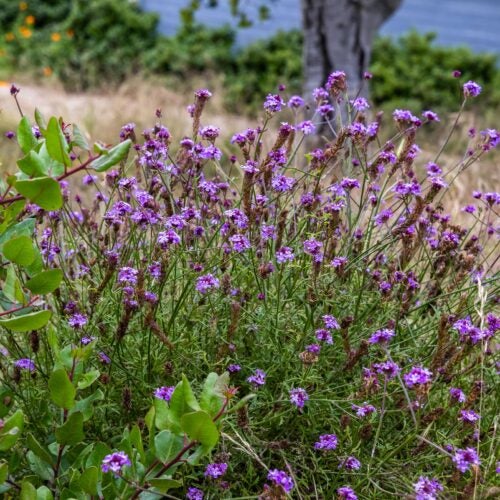
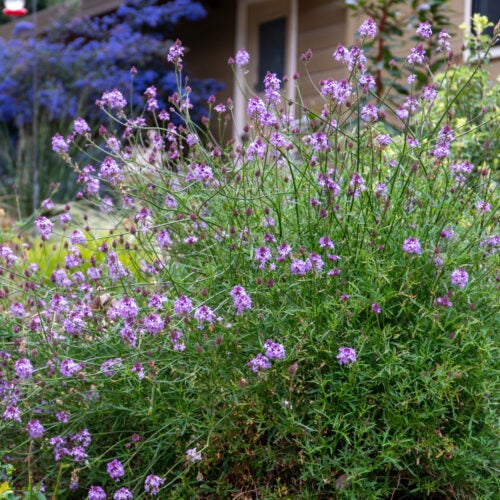
Fast-growing perennials that thrive in hot locations and produce clusters of small, showy flowers in summer.
Examples:
- Lilac verbena (V. lilacina ‘De La Mina’, 1-2’ x 2-3’) from the Cedros Island off the coast of Baja California is a popular native for its deep purple flower color and uniform growth habit.
- Garden verbena (V. x hybrida, 6-12” x 2-3’) is a popular and showy groundcover available in many colors.
- V. bonariensis (3-6’ x 2-3’) is an upright perennial from South America with long, airy flower stalks. Reseeds readily and should not be planted near riparian areas where it can be invasive.
Chaste Tree
Vitex agnus-castus
Shrub, Tree
Care:
Full Sun
Low
Well Drained
Look:
Medium
size
Gray Green
leaves
Blue
flowers
Lavender
flowers
Purple
flowers
- Blooming seasons:
- Fall | Summer
- Foliage:
- Deciduous
Chaste Tree
Vitex agnus-castus
Shrub, Tree
Care:
Full Sun
Low
Well Drained
Look:
Medium
size
Gray Green
leaves
Blue
flowers
Lavender
flowers
Purple
flowers
- Blooming seasons:
- Fall | Summer
- Foliage:
- Deciduous
Attractive deciduous shrub or small tree native to streambanks from the Mediterranean region to central Asia that produces spikes of fragrant lavender-blue flowers in summer into fall.
California Wild Grape
Vitis californica
Vine
Care:
Full Sun
Partial Shade
Low
Most Soils
Look:
Large
size
Medium
size
Green
leaves
Reddish
leaves
Yellow
flowers
- Blooming seasons:
- Spring
- Life cycle:
- Perennial
- Foliage:
- Deciduous
- Wildlife habitat:
- Bird Habitat | Butterfly Habitat
California Wild Grape
Vitis californica
Vine
Care:
Full Sun
Partial Shade
Low
Most Soils
Look:
Large
size
Medium
size
Green
leaves
Reddish
leaves
Yellow
flowers
- Blooming seasons:
- Spring
- Life cycle:
- Perennial
- Foliage:
- Deciduous
- Wildlife habitat:
- Bird Habitat | Butterfly Habitat
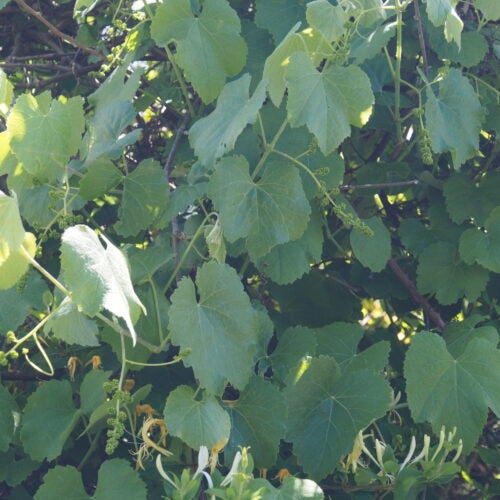
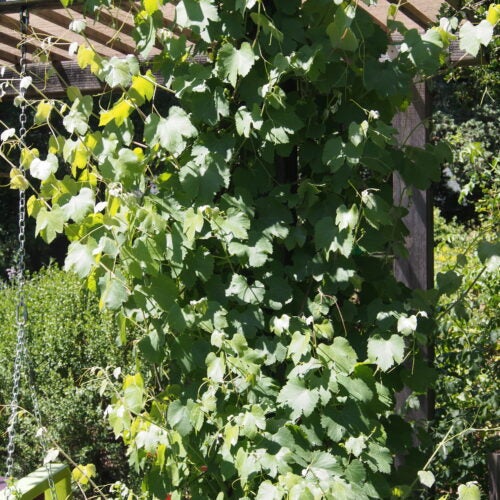
Vitis californica (California wild grape) fast growing California native deciduous vine to 30 feet or more, with large, soft, heart-shaped green leaves that turn bright red and yellow in fall. Fruits are small and sour but attractive to many birds. Sun to part shade, most soils.
Coast Rosemary
Westringia spp.
Shrub
Care:
Full Sun
Low
Most Soils
Look:
Medium
size
Small
size
Green -Light
leaves
Variegated
leaves
Lavender
flowers
White
flowers
- Blooming seasons:
- Fall | Spring | Summer | Winter
- Life cycle:
- Perennial
- Foliage:
- Evergreen
- Animal resilience:
- Deer Resistant | Pest Tolerance
Coast Rosemary
Westringia spp.
Shrub
Care:
Full Sun
Low
Most Soils
Look:
Medium
size
Small
size
Green -Light
leaves
Variegated
leaves
Lavender
flowers
White
flowers
- Blooming seasons:
- Fall | Spring | Summer | Winter
- Life cycle:
- Perennial
- Foliage:
- Evergreen
- Animal resilience:
- Deer Resistant | Pest Tolerance
Australian evergreen shrubs that are well-adapted to California gardens. W. fruticosa (3-6’ x 5-10’) is a mounding shrub with green-to-gray-green, needle-like leaves and small white or lavender flowers from winter into spring. W. ‘Wynyabbie Gem’ (6-8’ x 6-8’) has a more upright habit and lavender-blue flowers.
Yucca
Yucca spp.
Succulent
Care:
Full Sun
Partial Shade
Very Low
Low
Well Drained
Look:
Medium
size
Small
size
Blue Gray
leaves
Blue Green
leaves
White
flowers
- Blooming seasons:
- Spring | Summer
- Life cycle:
- Perennial
- Foliage:
- Evergreen
- Wildlife habitat:
- Hummingbird Habitat
- Animal resilience:
- Deer Resistant | Pest Tolerance
Yucca
Yucca spp.
Succulent
Care:
Full Sun
Partial Shade
Very Low
Low
Well Drained
Look:
Medium
size
Small
size
Blue Gray
leaves
Blue Green
leaves
White
flowers
- Blooming seasons:
- Spring | Summer
- Life cycle:
- Perennial
- Foliage:
- Evergreen
- Wildlife habitat:
- Hummingbird Habitat
- Animal resilience:
- Deer Resistant | Pest Tolerance
Evergreen succulent-like plants that grow over much of North America and feature sword-shaped leaves. Yuccas typically produce flowers on tall stalks in spring. Some yuccas are stemless while others have trunks and grow to tree size.
Examples: Banana yucca (Y. baccata, 3-4’ x 4-5’) eventually forms a short trunk. Adam’s needle (Y. filamentosa, 2-3’ x 4’) has loose fibers at the edge of leaves. Others are Spanish dagger (Y. gloriosa, 10’ x 8’), beaked yucca (Y. rostrata, 12-15’), and our Lord’s candle (Y. whipplei, 2-4’ x 3-6’), native to Southern California and Baja California.
Print this plant card