Water conservation is an essential consideration when designing and managing Sonoma and Marin County landscapes. Our area enjoys a Mediterranean climate characterized by wet winters and long, dry summers with little rainfall. Plants that are suited or adapted to local conditions not only use less water but generally grow more successfully and robustly, with fewer insect and disease problems. They ultimately create a healthier, more beautiful and more sustainable landscape.
Below is a hand selected plant list for Sonoma and Marin counties that displays mostly native species that will thrive in our climate. You can search, filter and save specific plants to your plant list and also print plant cards.
-
California Native
California Pipevine
Aristolochia californica -
California Native
Sagebrush, Wormwood
Artemisia ssp -
California Native
Milkweed
Asclepias spp. -
California Native
Dwarf Coyote Bush
Baccharis pilularis & cvs -
California Native
Blue Grama Grass
Bouteloua gracilis -
Stalked Bulbine
Bulbine frutescens -
Bottlebrush
Callistemon spp & cvs -
California Native
Spice Bush
Calycanthus occidentalis -
Sedge
Carex spp. -
California Native
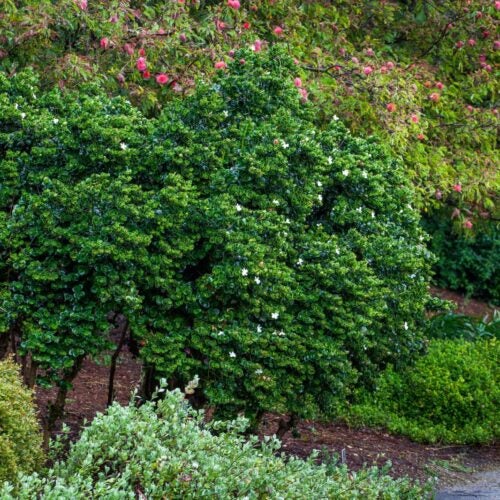
Bush Anenome
Carpenteria californica -
California Native
California Lilac
Ceanothus spp. & cvs. -
Plumbago
Ceratostigma spp.
California Pipevine
Aristolochia californica
CA Native, Vine
Care:
Partial Shade
Shade
Low
Most Soils
Look:
Medium
size
Green -Light
leaves
Pale Green
flowers
California Pipevine
Aristolochia californica
CA Native, Vine
Care:
Partial Shade
Shade
Low
Most Soils
Look:
Medium
size
Green -Light
leaves
Pale Green
flowers
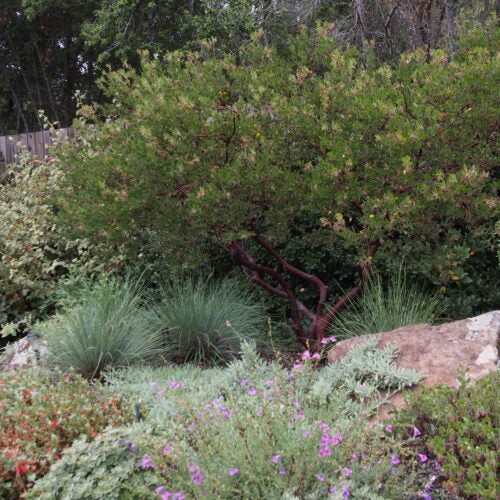
Important northern California native habitat plant that is the sole larval food source for the pipevine swallowtail butterfly. This deciduous vine grows naturally along stream banks and in woodlands and performs well under native oaks. Dutchman’s pipevine is relatively slow-growing and takes a few years to establish. Pendulous pipe-shaped flowers bloom in early spring, followed by soft, bright green, heart-shaped leaves. Best grown as a groundcover to provide protection for pipevine swallowtail larvae but will also twine up other plants and structures. The real show comes in late spring as larvae feed on the plant and grow into spectacular horned, black caterpillars with red spots!
Sagebrush, Wormwood
Artemisia ssp
CA Native, Shrub
Care:
Full Sun
Very Low
Low
Most Soils
Look:
Gray
leaves
Gray Green
leaves
Green
leaves
White
flowers
Yellow
flowers
Sagebrush, Wormwood
Artemisia ssp
CA Native, Shrub
Care:
Full Sun
Very Low
Low
Most Soils
Look:
Gray
leaves
Gray Green
leaves
Green
leaves
White
flowers
Yellow
flowers
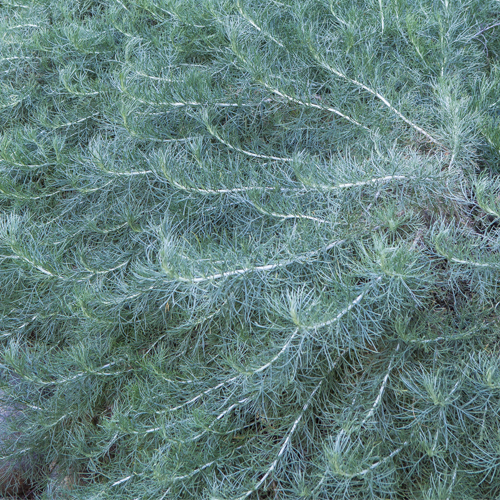
Large group of plants that includes annuals, perennials, and shrubs grown for fine, soft-textured, aromatic, gray-green foliage. Flowers are inconspicuous but provide a source of pollen, nectar, and seeds for wildlife. Shrubby varieties can be cut back to maintain a more tidy and compact appearance. Perennial varieties can be divided in fall or early spring. Excellent choice as support for more showy plants in the garden.
Examples: A. ‘Powis Castle’ (3’ x 6’), A. californica (2-5’ x 4-5’, low-growing cultivars ‘Canyon Gray’ and ‘Montara’), A. pycnocephala ‘David’s Choice’ (6” x 2’).
Milkweed
Asclepias spp.
CA Native
Care:
Full Sun
Partial Shade
Low
Most Soils
Look:
Medium
size
Small
size
Green
leaves
Pink
flowers
White
flowers
Milkweed
Asclepias spp.
CA Native
Care:
Full Sun
Partial Shade
Low
Most Soils
Look:
Medium
size
Small
size
Green
leaves
Pink
flowers
White
flowers
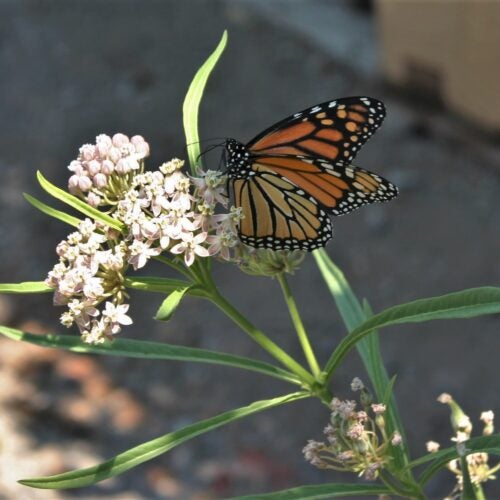
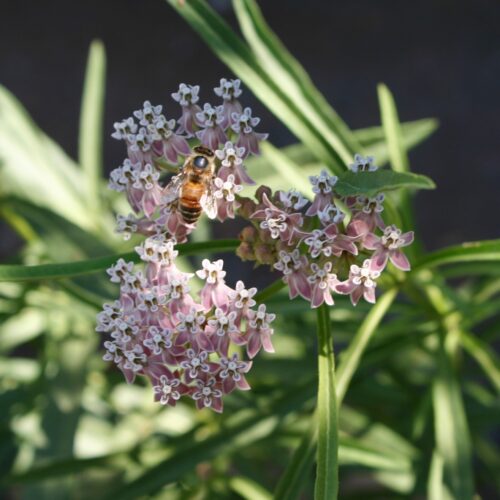
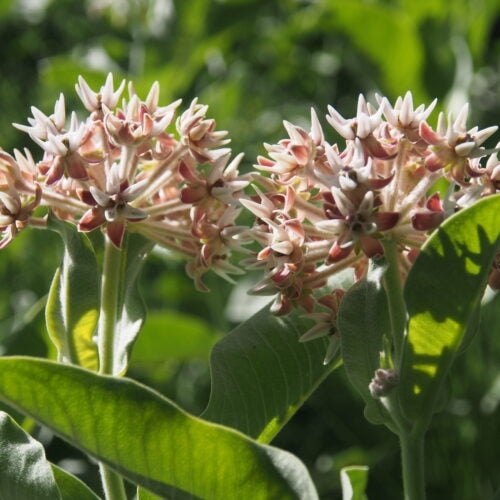
Colony-forming, herbaceous perennials with several species providing important habitat and larval food sources for the monarch butterfly while attracting a diverse array of insects.
California milkweeds go dormant during the colder months. Stems that emerge in April or May bear clusters of small, star-like flowers in summer followed by silky-tailed seeds that are dispersed by wind. Choose a California native species to best support local monarch populations and provide a food source for their larvae.
A. fascicularis (narrow-leaved milkweed, 1-3’) has clusters of lavender or pinkish white flowers; A. speciosa (showy milkweed, 2-4’) has larger, soft foliage, and showier flower clusters; A. cordifolia (heart leaf milkweed, 1-2′) has bluish green heart-shaped leaves, and creamy white and purple flowers.
Dwarf Coyote Bush
Baccharis pilularis & cvs
CA Native, Ground Cover, Shrub
Care:
Full Sun
Low
Most Soils
Look:
Medium
size
Green - Dark
leaves
White
flowers
Dwarf Coyote Bush
Baccharis pilularis & cvs
CA Native, Ground Cover, Shrub
Care:
Full Sun
Low
Most Soils
Look:
Medium
size
Green - Dark
leaves
White
flowers
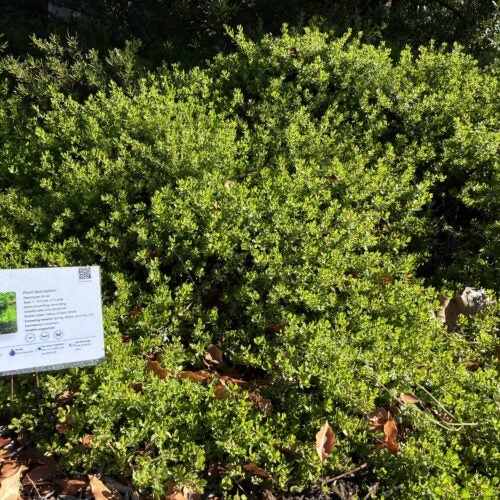
Flowers are inconspicuous but provide a source of pollen, nectar, and seeds for wildlife. Shrubby varieties can be cut back to maintain a more tidy and compact appearance. Perennial varieties can be divided in fall or early spring. Excellent choice as support for more showy plants in the garden.
Blue Grama Grass
Bouteloua gracilis
CA Native, Grass
Care:
Full Sun
Low
Well Drained
Look:
Small
size
Green
leaves
Yellow
flowers
Blue Grama Grass
Bouteloua gracilis
CA Native, Grass
Care:
Full Sun
Low
Well Drained
Look:
Small
size
Green
leaves
Yellow
flowers
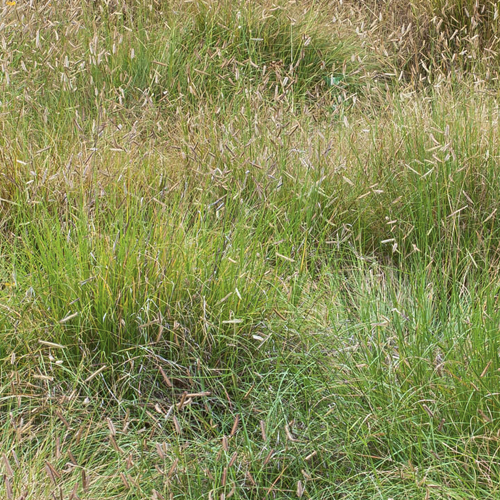
North American native, warm-season bunchgrass with narrow, grayish green leaves. Ornamental flowers like small brushes form at right angles to slender stems during the summer and persist for many months. Blue grama is adapted to heat, drought, cold, and foot traffic. It does not thrive in shade or wet soils. Blue grama can be used in small clumps among other plants, in a mass as part of a meadow, or even as a lawn substitute. B. g. ‘Blonde Ambition’ is a popular and robust cultivar.
Stalked Bulbine
Bulbine frutescens
Succulent
Care:
Full Sun
Partial Shade
Low
Most Soils
Look:
Small
size
Gray Green
leaves
Green -Light
leaves
Orange
flowers
Yellow
flowers
Stalked Bulbine
Bulbine frutescens
Succulent
Care:
Full Sun
Partial Shade
Low
Most Soils
Look:
Small
size
Gray Green
leaves
Green -Light
leaves
Orange
flowers
Yellow
flowers
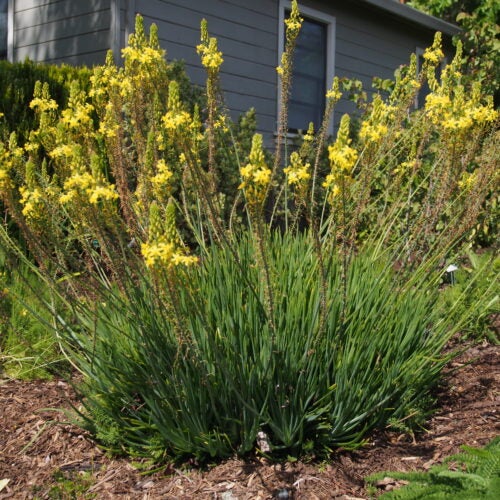
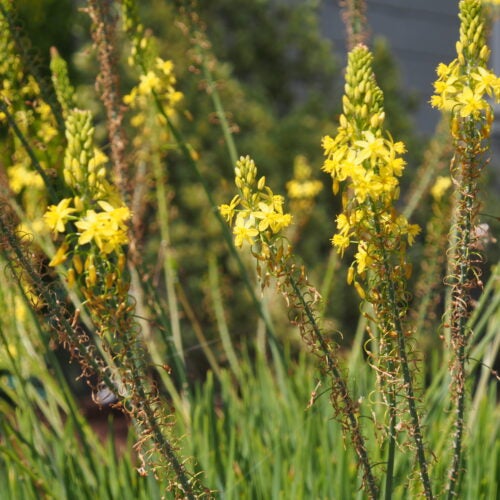
Bulbine frutescens grows 1-2 feet tall and 2-3 feet wide. Narrow, succulent, light gray-green leaves and conical clusters of bright yellow, star-shaped flowers on tall stems in spring. Cultivars include ‘Hallmark’ with orange flowers, and ‘Tiny Tangerine’, a shorter cultivar with orange flowers that thrives in full sun. Native to the southern coast of South Africa north to Mozambique. Sun to part shade, afternoon shade in hot-summer climates, most soils.
Bottlebrush
Callistemon spp & cvs
Shrub
Care:
Full Sun
Partial Shade
Low
Well Drained
Look:
Green
leaves
Red
flowers
Bottlebrush
Callistemon spp & cvs
Shrub
Care:
Full Sun
Partial Shade
Low
Well Drained
Look:
Green
leaves
Red
flowers
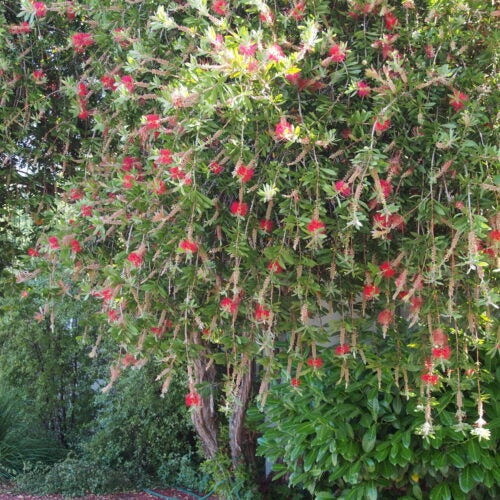
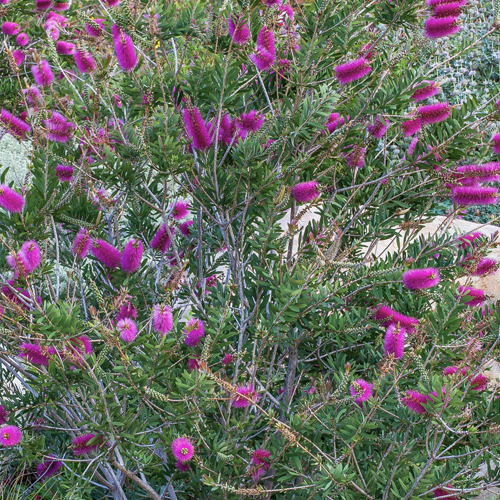
Popular Australian evergreen shrub or small tree attractive to hummingbirds, butterflies, and bees typically for bright red flowers that resemble a bottle brush. Flowering begins in spring and continues into fall. Bottlebrush will tolerate many garden conditions and exposures and is tolerant of dry conditions once established. Shrub varieties can be pruned to an informal hedge or be left to show their natural shape.
Examples: Lemon bottlebrush (C. citrinus, 6-12’ x 8-12’) is the most commonly grown species in California. Weeping bottlebrush (C. viminalis, 20’ x 15’) has pendulous branches. C. viminalis ‘Little John’ (3-5’ x 4-6’) is a low-growing, mounding form with deep red flowers that is popular as a foundation or accent plant.
Spice Bush
Calycanthus occidentalis
CA Native, Shrub
Care:
Full Sun
Partial Shade
Low
Moderate
Most Soils
Look:
Medium
size
Green
leaves
Red
flowers
Spice Bush
Calycanthus occidentalis
CA Native, Shrub
Care:
Full Sun
Partial Shade
Low
Moderate
Most Soils
Look:
Medium
size
Green
leaves
Red
flowers
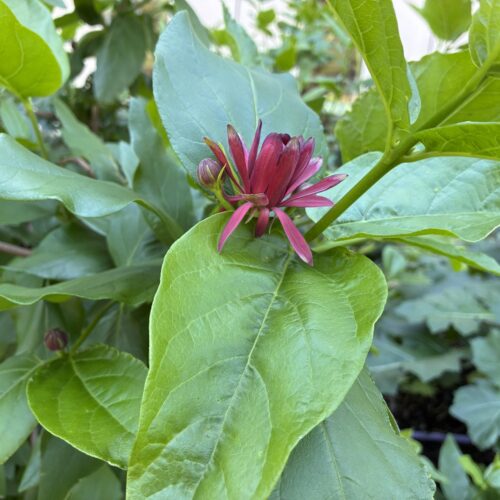
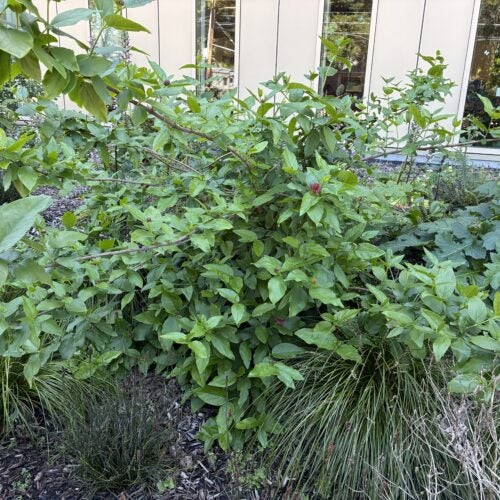
Spice Bush (Calycanthus occidentalis) is a deciduous shrub with bright green leaves. Lotus-shaped red flowers have a wine-like fragrance, and bloom from late spring through early autumn. The bark also has a camphor-like smell. It can grow as a large, rounded shrub 3 to 12 feet tall and wide or pruned as a small multi-trunked tree. Part-shade is ideal but it can tolerate full sun with added moisture in cooler areas. It accepts full shade but will grow more slowly and with a more open habit. It is adaptable to different types of soil, and is somewhat deer resistant. Resistant to drought and also tolerant of moisture, Spice Bush is a great plant to include in a rain garden.
Sedge
Carex spp.
Grass
Care:
Full Sun
Partial Shade
Low
Most Soils
Look:
Small
size
Green
leaves
Yellow
leaves
Sedge
Carex spp.
Grass
Care:
Full Sun
Partial Shade
Low
Most Soils
Look:
Small
size
Green
leaves
Yellow
leaves
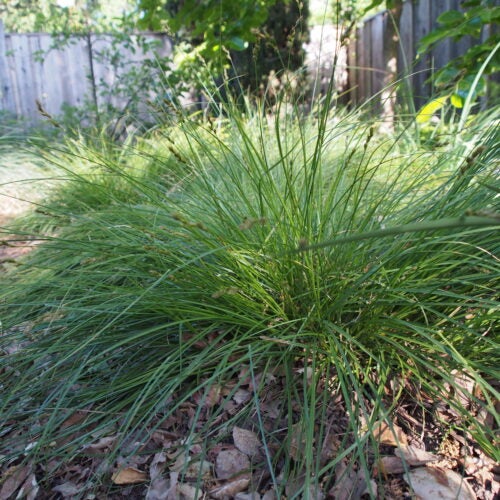
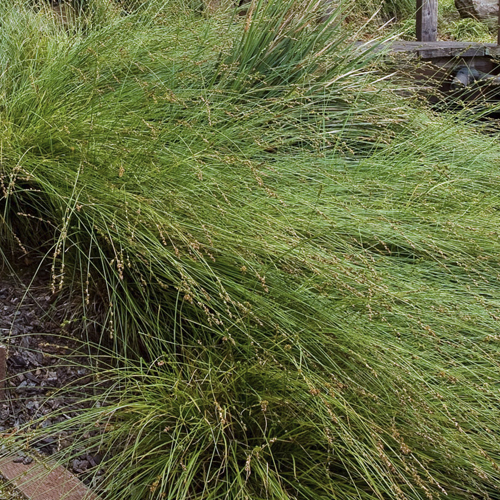
Large group of grass-like, clumping plants with low or moderate water needs that are native to many parts of the world and offer a variety of shapes, sizes, and foliage characteristics. Some sedges are ideal for use in rain gardens and swales, for stabilizing slopes, as a mass groundcover, or as part of a meadow planting. Two low-water examples that prefer some shade are Catlin sedge (C. texensis, 4-6” x 6-8”), a small, mat-like sedge native to central and southwestern North America, and Berkeley sedge (C. tumulicola, 1-2’ x 1-2’), a larger species native to western North America that tends to self-sow. Other species require more water and may be less suited to dry inland conditions.
Bush Anenome
Carpenteria californica
CA Native, Shrub
Care:
Full Sun
Partial Shade
Low
Most Soils
Look:
Medium
size
Green
leaves
White
flowers
Yellow
flowers
Bush Anenome
Carpenteria californica
CA Native, Shrub
Care:
Full Sun
Partial Shade
Low
Most Soils
Look:
Medium
size
Green
leaves
White
flowers
Yellow
flowers
The bush anenome is a pleasantly fragranced shrub that can grow to 6-8 feet tall and 3-5 feet wide. It has glossy green leaves and white flowers with large yellow centers which attract bees and butterflies. It is native to the Sierra Nevada foothills, and can tolerate sun to part shade depending on location. It will adapt to many soils as long as they are well-draining. In nurseries, its ‘Elizabeth’ cultivar is often sold.
California Lilac
Ceanothus spp. & cvs.
CA Native, Ground Cover, Shrub, Tree
Care:
Full Sun
Partial Shade
Very Low
Low
Well Drained
Look:
Medium
size
Green
leaves
Green - Dark
leaves
Blue
flowers
White
flowers
California Lilac
Ceanothus spp. & cvs.
CA Native, Ground Cover, Shrub, Tree
Care:
Full Sun
Partial Shade
Very Low
Low
Well Drained
Look:
Medium
size
Green
leaves
Green - Dark
leaves
Blue
flowers
White
flowers
Ceanothus is a group of fast-growing, evergreen shrubs that vary from groundcovers to small trees, many of which are native to California. They provide a spectacular display of flowers in spring that will attract a multitude of pollinators. Flowers are followed by seeds that provide food for birds. The clusters of tiny flowers range from white to deep violet. Plants perform best with good drainage and minimal irrigation once established. Some do best in cooler coastal climates, but many thrive in hotter inland climates. Pay close attention to the mature size when selecting ceanothus to ensure that it has sufficient space for its natural form.
Groundcovers: C. ‘Centennial’ (1’ x 8’), C. gloriosus var. gloriosus ‘Anchor Bay’ (2’ x 8’), C. griseus var. horizontalis ‘Diamond Heights’ (variegated, 1’ x 4’), C. griseus var. horizontalis ‘Yankee Point’ (3’ x 12’), C. maritimus (2’ x 6’).
Shrubs: C. ‘Blue Jeans’ (6’ x 6’), C. Concha (6’ x 6’), C. ‘Dark Star’ (6’ x 8’), C. ‘Joyce Coulter’ (4’ x 12’), C. ‘Julia Phelps’ (8’ x 10’), C. cuneatus (8’ x 8’), C. thyrsiflorus ‘Skylark’ (4’ x 6’).
Large shrubs: C. ‘Frosty Blue’ (10’ x 12’), C. thyrsiflorus (20’ x 20’), C. t. ‘Snow Flurry’ (white flower, 20’ x 20’).
Trees: C. ‘Ray Hartman’ (15′ x 15′)
Plumbago
Ceratostigma spp.
Ground Cover, Shrub
Care:
Full Sun
Partial Shade
Low
Well Drained
Look:
Medium
size
Bronze
leaves
Green
leaves
Blue
flowers
Plumbago
Ceratostigma spp.
Ground Cover, Shrub
Care:
Full Sun
Partial Shade
Low
Well Drained
Look:
Medium
size
Bronze
leaves
Green
leaves
Blue
flowers
This small group of herbaceous, flowering perennials is valued for clusters of intense blue flowers in summer and fall. Two widely available low-water species are shrubby Burmese plumbago (C. griffithii, 2-4’ x 2-6’) and the popular groundcover, dwarf plumbago (C. plumbaginoides, 6-12”, spreading to 3-4’).
Print this plant card