I moved to Tiburon in 2014. The site did not have much flat ground at all, in fact most of it was extremely steep. Originally planted in 2000, it had been neglected, and other than a few old shrubs and some trees, it was full of black acacia, echium and weed grass, with a few pyracathas thrown in. I knew I wanted to provide habitat for the local creatures, and give enrichment in food and beauty to the people that see my garden.
Repelling Down the Hillside:
Intially, I had to rappel down most of the hillside to weed and plant. I watched the weather and sun patterns and hired a landscape architect to design plans for terracing and steps and fencing that the neighbors and town would approve. When the bids for the contracting came in astronomically high (like the cost of a small house), I decided on a slower, less permanent and certainly not polished approach to create access, using many reclaimed materials, and skip the fence altogether.
About The Garden:
The Garden Design
It is the design principles of “Variety and Repetition” that most turn me on, and one can definitely see that in my garden designing. The idea to create mosaics on the materials I used down the hillside came naturally, and showcasing the creatures that live here seemed perfect. I have many more plans, but landscape design is “the slowest performance art”.
The Challenges
Because deer are in the yard every day, I have planted some non-native plants, either for their beauty, or fruit. Besides dealing with the incline and the deer, growing things in the serpentine soil has been another challenge. Growing up in California, I fully embrace drought tolerant garden practices, so I was hoping that the terracing would help slow my water run off, besides allowing safer access. It seems to have worked.
The Inspiration
I have been inspired by the writings of Judith Lowry, and Doug Tallamy, LOVE “Calscape”, and rationalize my collector addiction with the goal of “Biodiversity”. I feel the need to experiment to see what will work in each situation, but love learning about flora.
Marin Water Resources:
The District has ongoing water rules in place, designed to eliminate water waste throughout Marin, year-round. These rules apply to customers within the District’s service area, which covers central and southern Marin. If you receive your water bill from a different agency, please check with that agency regarding any applicable water use rules:
Water Rules: To learn more about the Ongoing Water Rules.
Rebates and Programs: Marin Water offers a great package of rebates and money-saving incentives for water conservation.
Water Saving Tips: A list of ways you can use water efficiently in the home and in the garden.
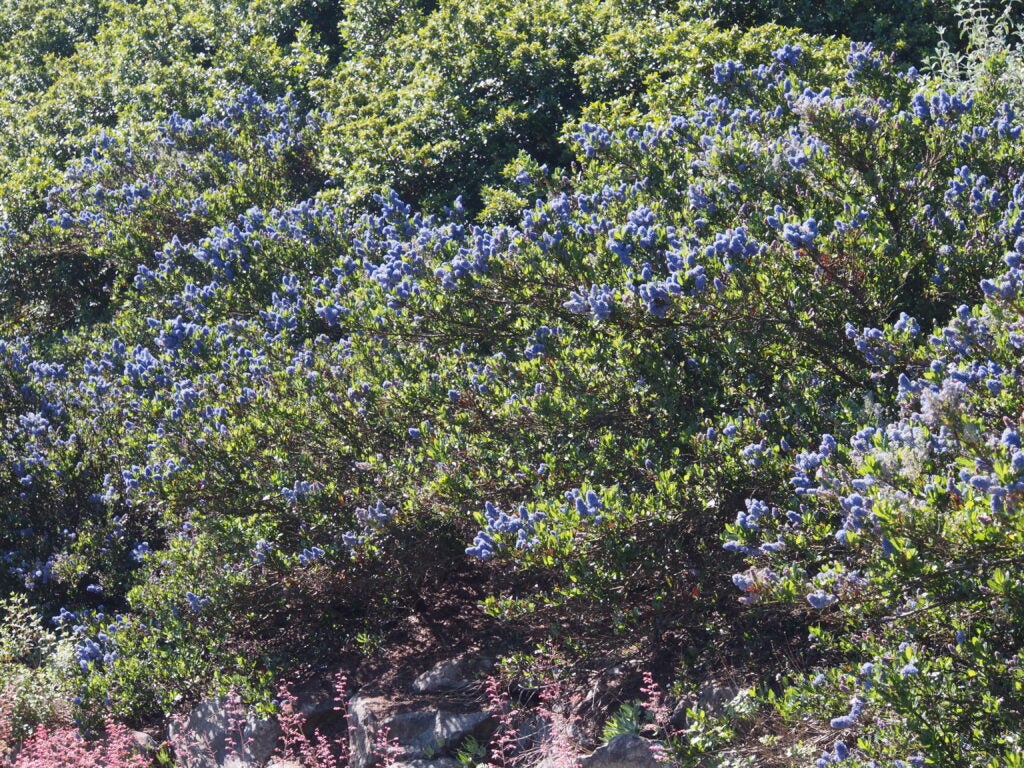
Ceanothus is a group of fast-growing, evergreen shrubs that vary from groundcovers to small trees, many of which are native to California. They provide a spectacular display of flowers in spring that will attract a multitude of pollinators. Flowers are followed by seeds that provide food for birds. The clusters of tiny flowers range from white to deep violet. Plants perform best with good drainage and minimal irrigation once established. Some do best in cooler coastal climates, but many thrive in hotter inland climates. Pay close attention to the mature size when selecting ceanothus to ensure that it has sufficient space for its natural form.
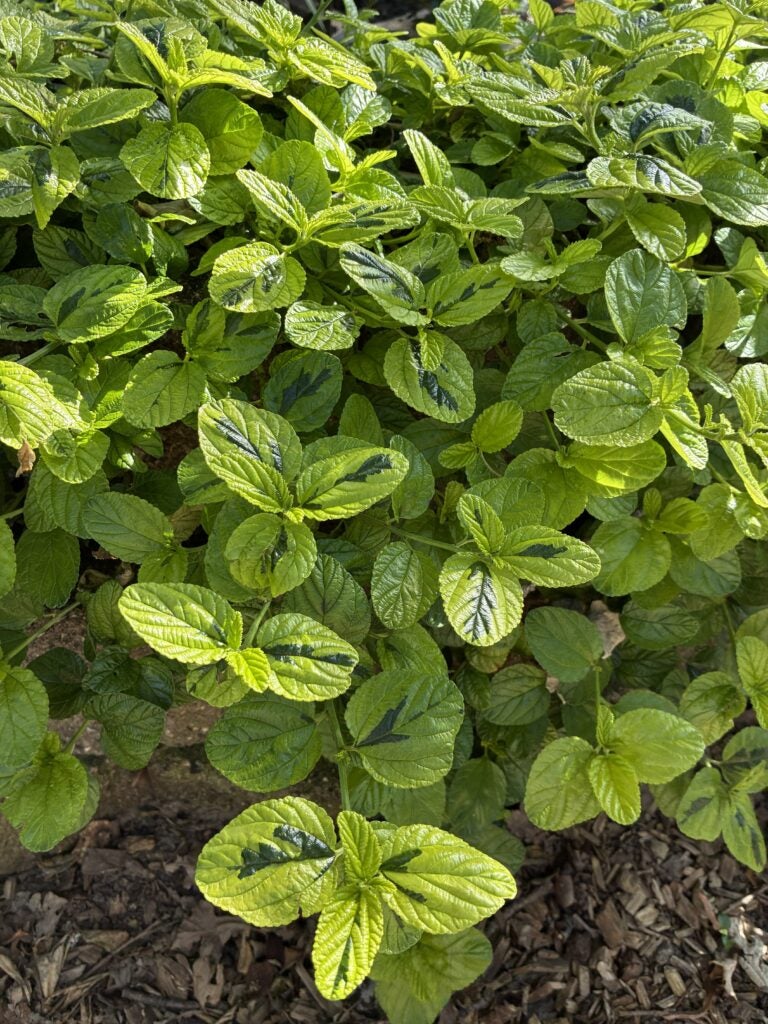
Groundcovers: C. ‘Centennial’ (1’ x 8’), C. gloriosus var. gloriosus ‘Anchor Bay’ (2’ x 8’), C. griseus var. horizontalis ‘Diamond Heights’ (variegated, 1’ x 4’), C. griseus var. horizontalis ‘Yankee Point’ (3’ x 12’), C. maritimus (2’ x 6’).
Shrubs: C. ‘Blue Jeans’ (6’ x 6’), C. Concha (6’ x 6’), C. ‘Dark Star’ (6’ x 8’), C. ‘Joyce Coulter’ (4’ x 12’), C. ‘Julia Phelps’ (8’ x 10’), C. cuneatus (8’ x 8’), C. thyrsiflorus ‘Skylark’ (4’ x 6’).
Large shrubs: C. ‘Frosty Blue’ (10’ x 12’), C. thyrsiflorus (20’ x 20’), C. t. ‘Snow Flurry’ (white flower, 20’ x 20’).
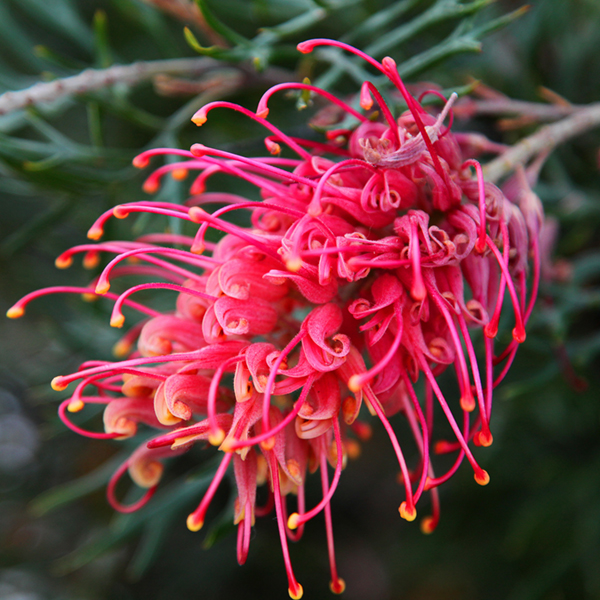
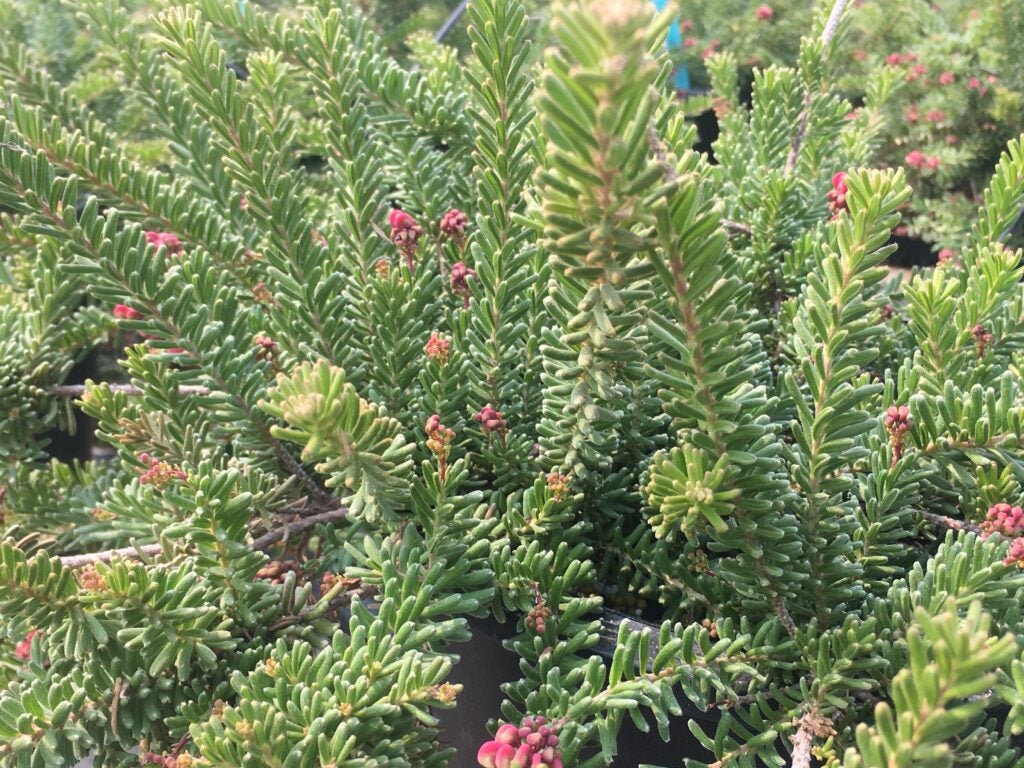
Group of flowering, evergreen shrubs, groundcovers and trees from Australia with many variations in growth habit and leaf shape. Red is the most common flower color, although some species flower in other colors.
Examples: G. ‘Canberra Gem’ (8-10’ x 10-12’) with needle-like leaves, G. ‘Noellii’ (3-4’ x 4-5’) also with needle-like leaves, woolly grevillea (G. lanigera, 3-6’ x 6-10’), the more prostrate C.I. ‘Coastal Gem’ (18” x 4-5’) and G. l. ‘Jade Mound’ (2’ x 4-5’), lavender grevillea (G. lavandulacea (2-5’ x 6-8’), and rosemary grevillea (G. rosmarinifolia, 6’ x 6’).
Iris are a large and diverse group of perennials that grow from either bulbs or rhizomes. The California native Douglas iris and cultivars known as Pacific Coast Hybrids are an excellent choice for summer-dry gardens and understory plantings. Fall rain brings new growth in the form of thin, upright leaves, followed in late winter to early spring by the first blossoms. Douglas iris commonly ranges in color from lavender to purple, but cultivars are available in a range of colors including white and yellow. Established plantings can be lifted and divided after the first significant fall rain and either replanted or put into containers to share with others.
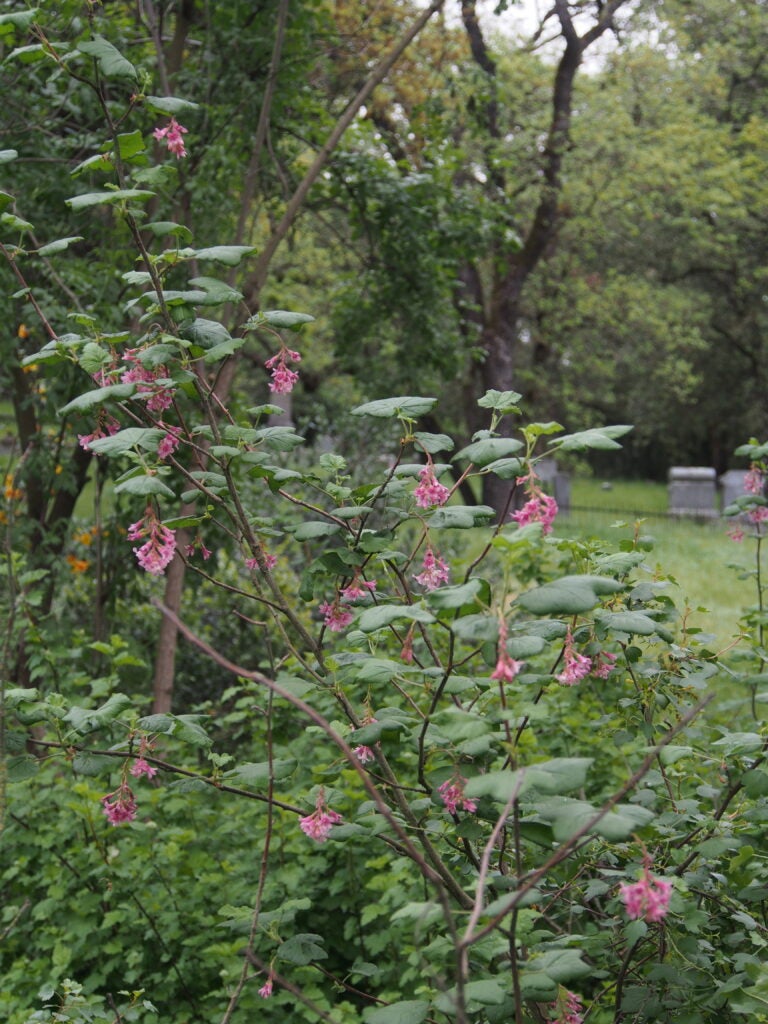
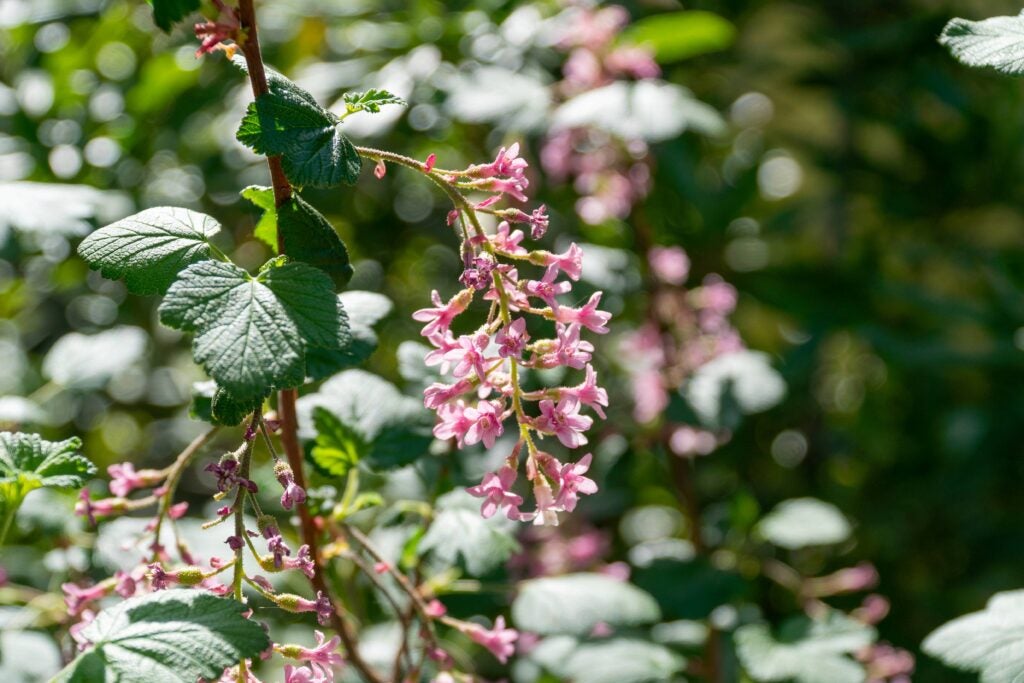
Currants (without spines) and gooseberries (with spines) are grown for their graceful growth habit, attractive foliage, wonderful displays of pendulous flowers in winter-spring that are attractive to hummingbirds, and colorful fruit that provides a food source for birds. Most of the species listed are deciduous, going dormant in the summer months.
Examples: Some of the species suitable for California gardens, preferably with partial shade, are native to the Western United States:
R. aureum, golden currant (5-10’ x 3-6’), deciduous with small clusters of delicate yellow flowers and sprawling habit.
R. malvaceum, chaparral currant (4-8’ x 4-6’), deciduous with early clusters of pink flowers, a slightly vase-shaped habit, and more drought-tolerant than most species.
R. sanguineum var. glutinosum, pink-flowering currant (5-12’ x 5-12’), deciduous with maple-like leaves, a vase-shaped habit, and long pendulous clusters of pink, reddish, or white flowers in the spring; many available cultivars such as ‘Claremont’ and ‘White Icicle’.
R. speciosum, fuchsia-flowered gooseberry (4-8’ x 6-10’), deciduous with spiny, arching stems and bright red fuchsia-like flowers along the stems in the spring that are attractive to hummingbirds.
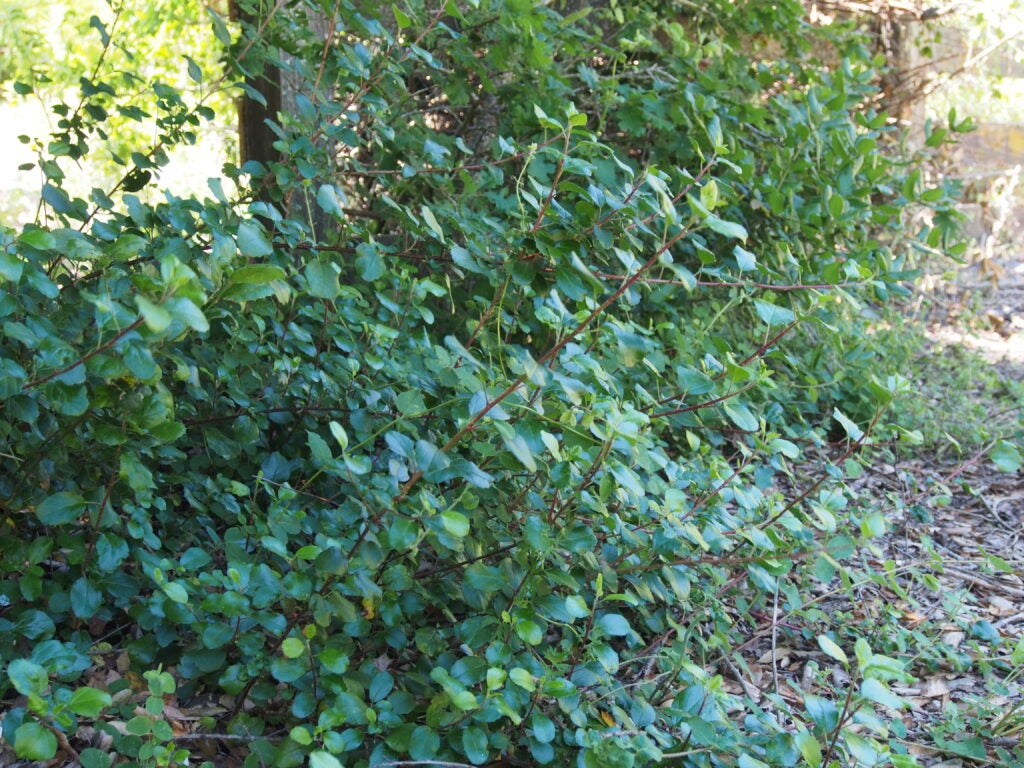
R. viburnifolium, evergreen currant or Catalina perfume (2-4’ x 5-7’), evergreen groundcover that works well under oaks and can provide erosion control to slopes.